Watercourse Diversion for New Office Development
Case study
Watercourse Diversion for New Office Development
Watercourse diversion and enabling works for a new office development
Scope
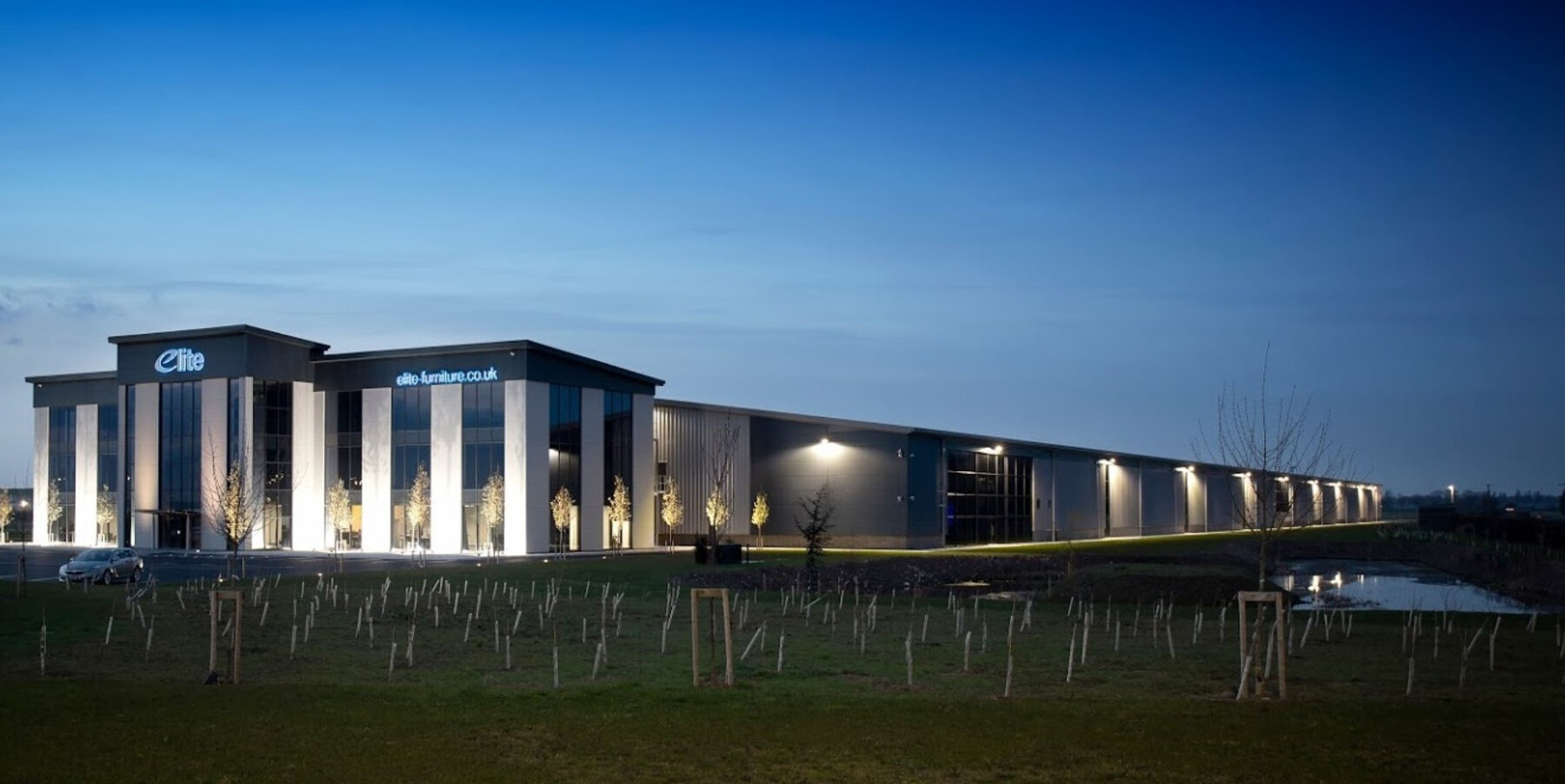
To provide enabling works and eliminate 152m length of watercourse running through the site prior to the construction of occupying 244,254 sq ft of manufacturing space and office space in Goole, East Riding of Yorkshire.
Key Aspects
- Topsoil strip and storage.
- Grading and laser levelling.
- 76 no Concrete Box Culvert 1.8m high x 3.6m wide with a weight of 15 tons each.
- 40,000 tons of imported sub-base aggregate.
- 356m of 300mm diameter pipework.
- 450m of 600mm diameter pipework.
- Hydrobrake chamber and other manholes.
- 2 no swales.
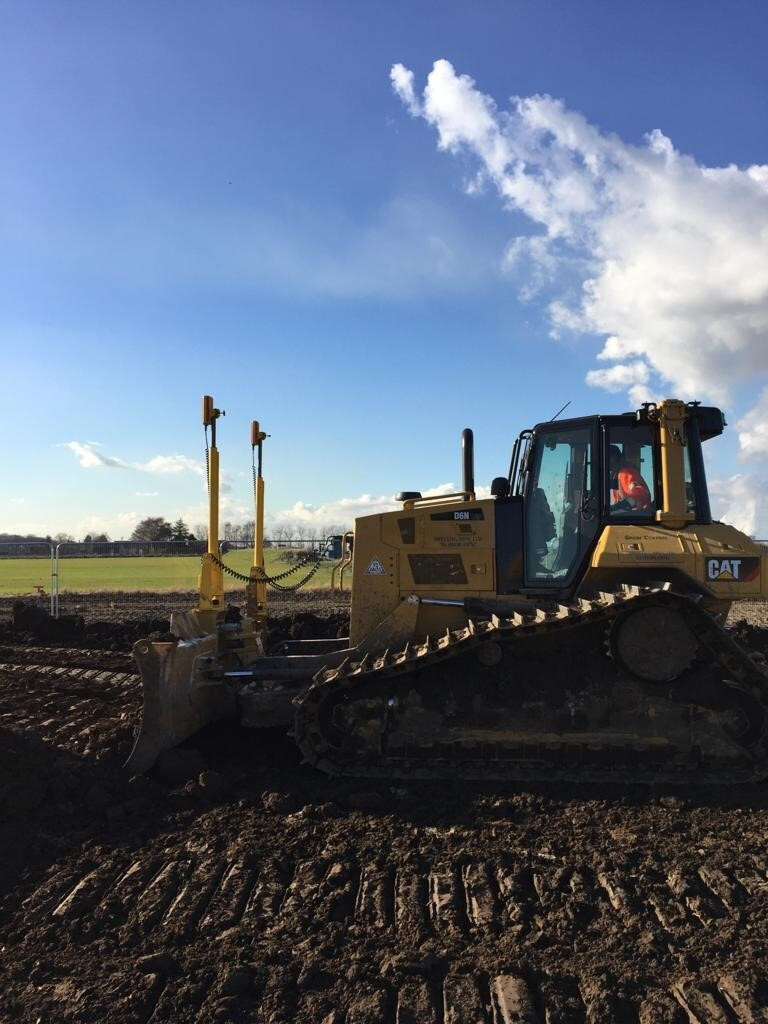
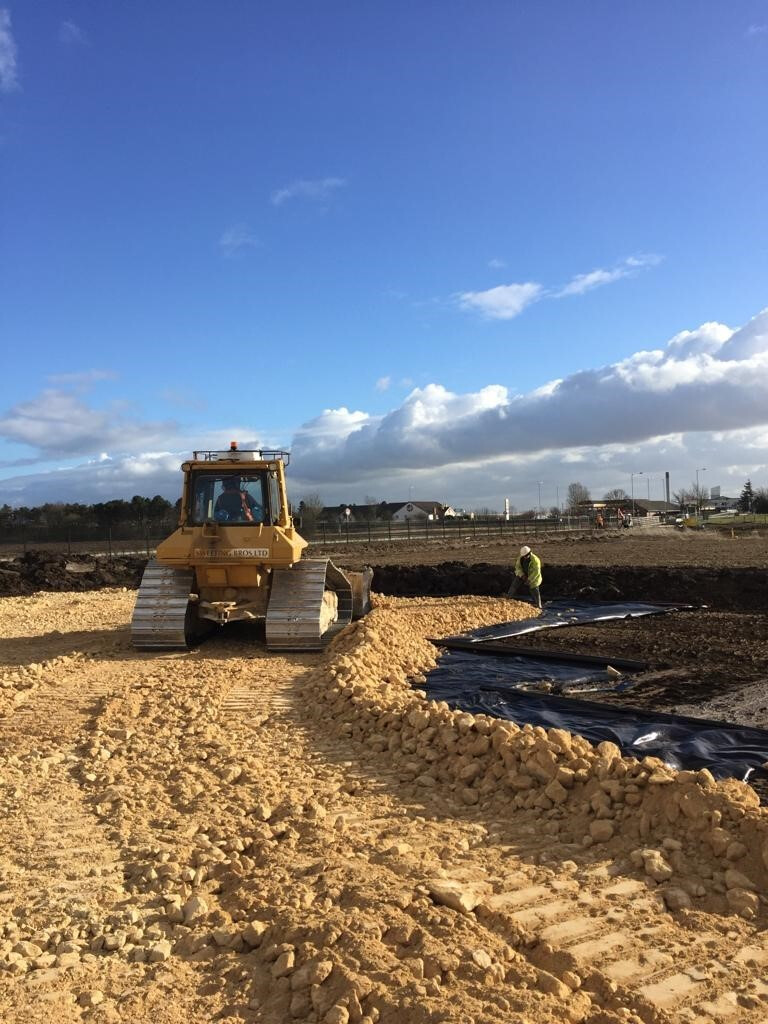
Top soil was initially stripped and stockpiled on site for later re-use. 40,000 tons of aggregate was imported to create the appropriate levels, laser levelled, compacted and tested to ensure accurate load bearing to design requirements.
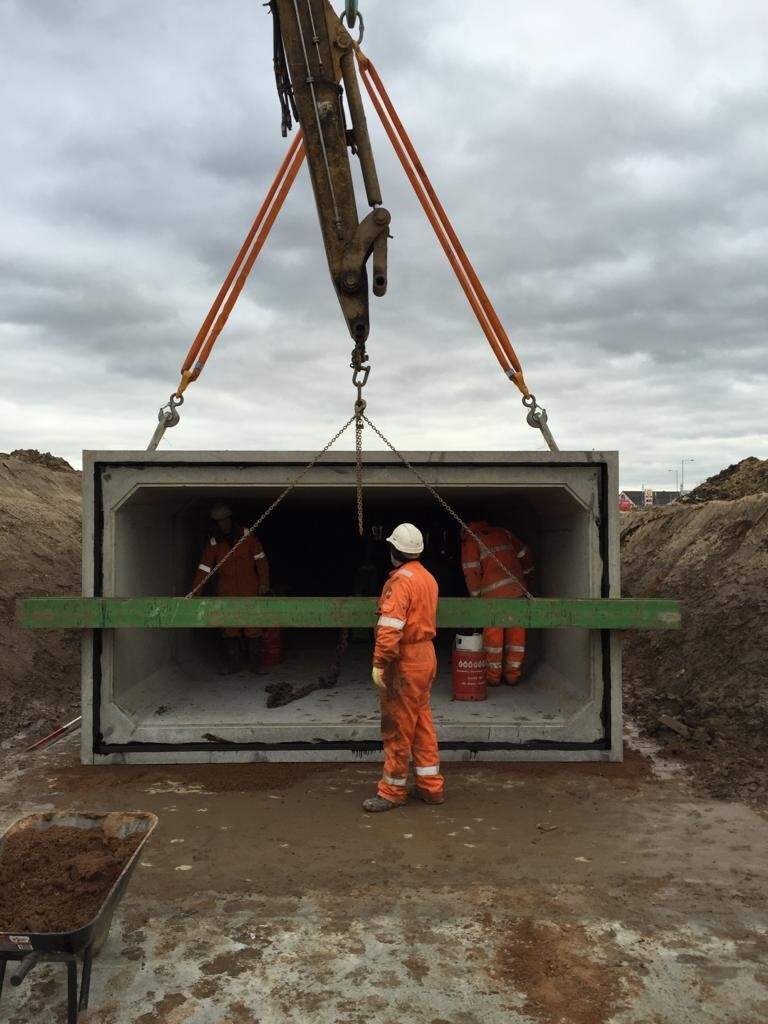
During excavation and construction works, water flow from the existing watercourse had to be managed to ensure safe working areas. Each 15 ton section of concrete box culvert was carefully lifted into position, located and sealed. A total of 1140 tons of box culvert over 152m was successfully positioned.
Outfall works and a comprehensive system of pipework, swales and chambers were also constructed to manage on-site drainage.
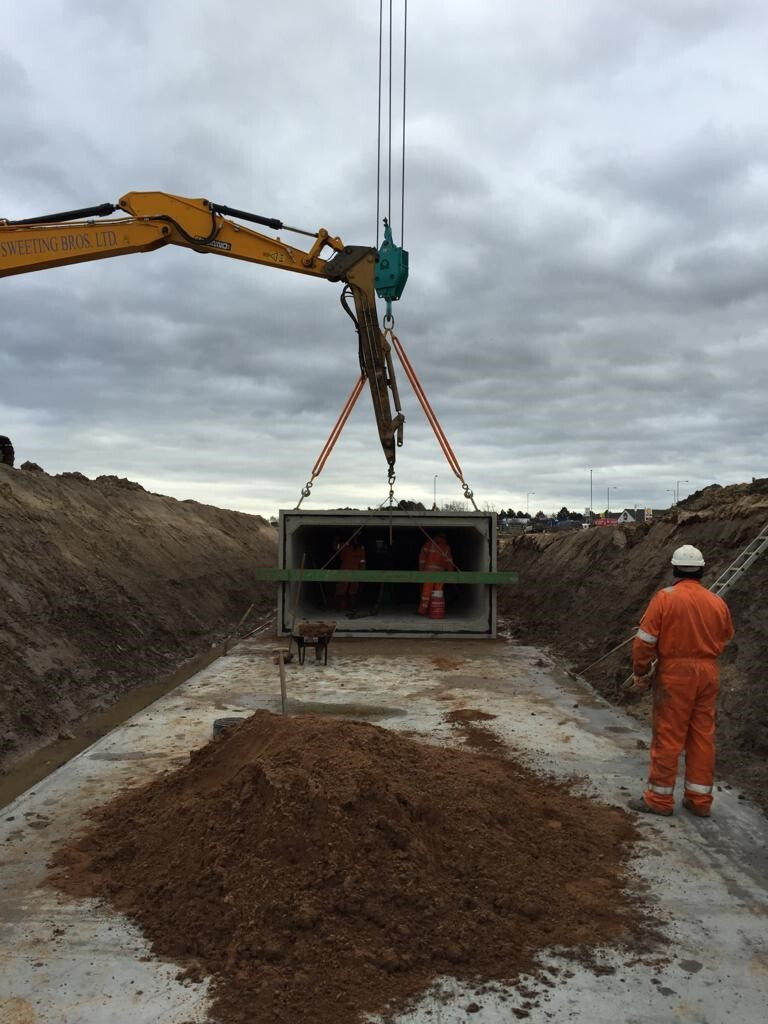
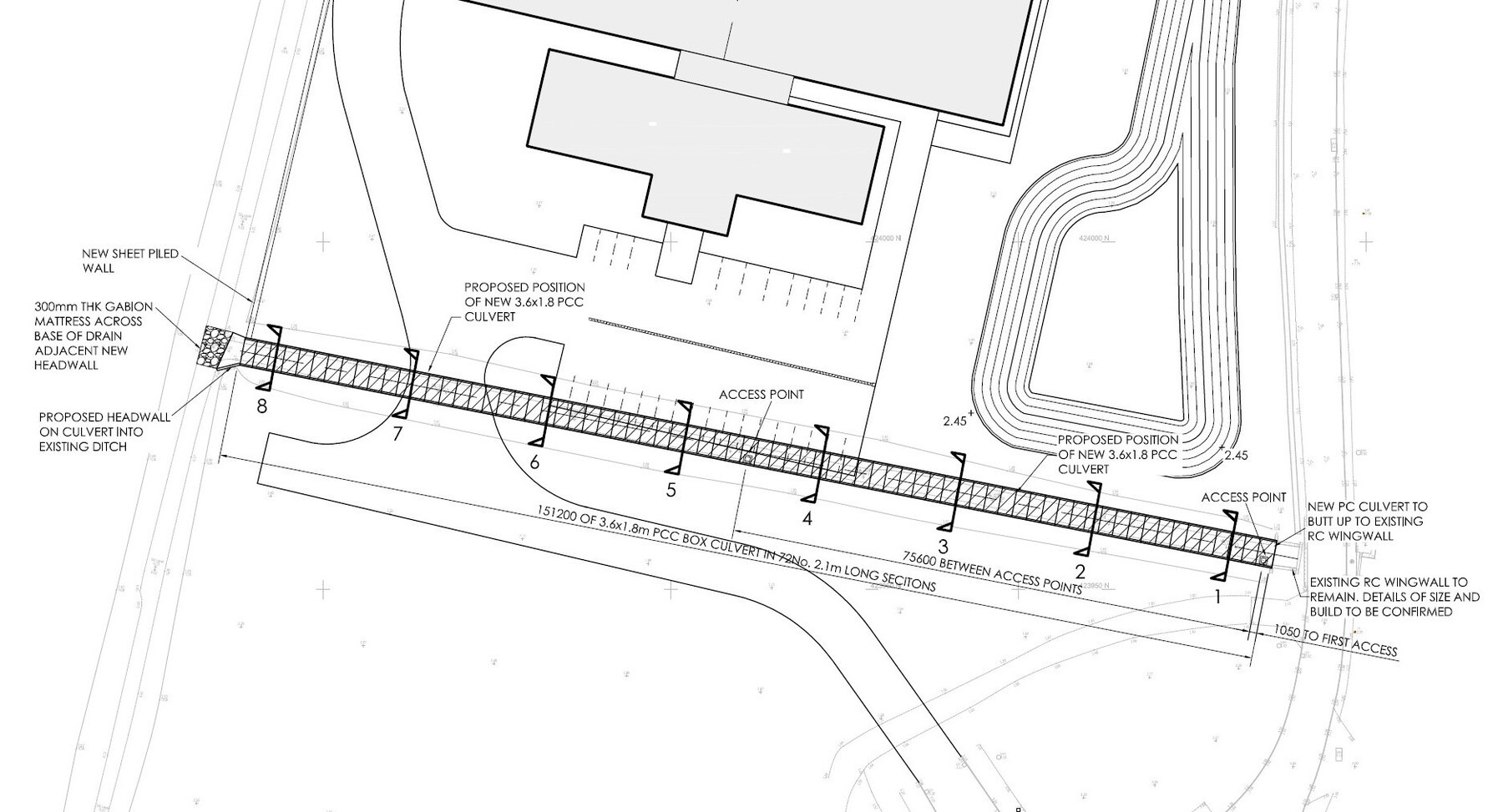
Locating, Levelling and Sealing of Culvert Sections
Challenges
Health & Safety
All works were carried out compliantly under CDM 2015 protocols requiring Construction Phase Plans together with comprehensive assessment of all risks and method statements to minimise risks for all work elements.
Lifting operations in particular posed specific challenges to ensure no damage occurred to culvert sections.
Flood Risk
By far the biggest issue and key at every stage; a lot of consideration and design work for temporary works had to be put in place to manage the risk of flooding.
Large volumes of water coming through the drainage network had to temporarily dammed off to make the workings dry. This was managed with 2 pumps one 8 inch and one 6 inch to cope with the volume of water that needed to be over pumped for the duration of the works 24/7.
Biosecurity
Moving machinery from one property to another often requires biosecurity and environmental protocols to minimise transfer of contaminants or invasive species such as black grass.
Working with Water
Working in or around water poses hazards for employees arising from the natural environment. The presence of vermin and exposure to leptospirosis, together with the possibility of drowning, add to the normal risks involving accidents concerning machinery and moving parts. Works taking place in live watercourses also pose problems arising from adverse weather and increased rainfall. It was necessary to monitor and adjust programmes to accommodate and minimise risks. Pumping out of accumulating or rising ground water is often necessary to ensure safe working conditions.
Cooperation
As with any large project where multiple stakeholders are involved, co-operation is key factor in success. Sweeting Bros Ltd are adept at managing multi-agency stakeholders.
Planning a watercourse or civil engineering project?
Speak to Sweeting Bros about practical drainage, watercourse, enabling and civil engineering works.