Skelton Flood Gate
Case study
Skelton Flood Gate
Flood gate and cofferdam works at Skelton
Scope
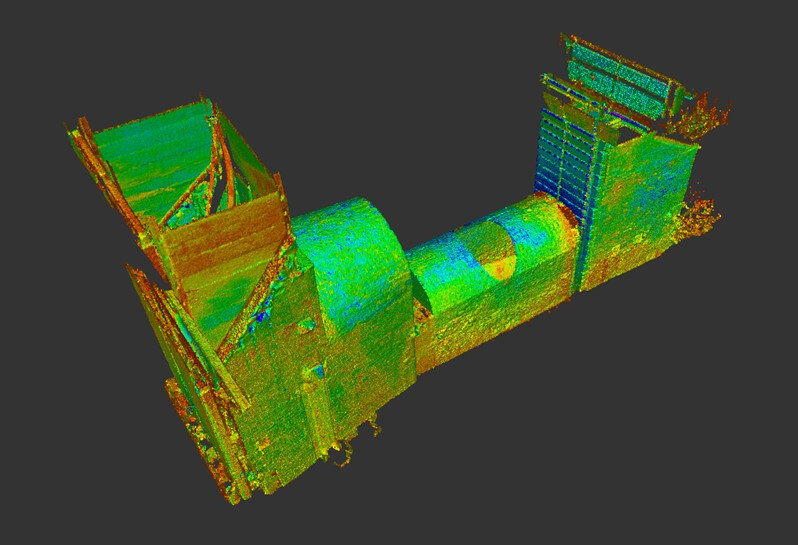
Phase 1 – to reduce criticality of the situation by the installation of a long term cofferdam to reduce flood risk to Howden and surrounding properties and businesses and 3D Cloud Point Surveys.
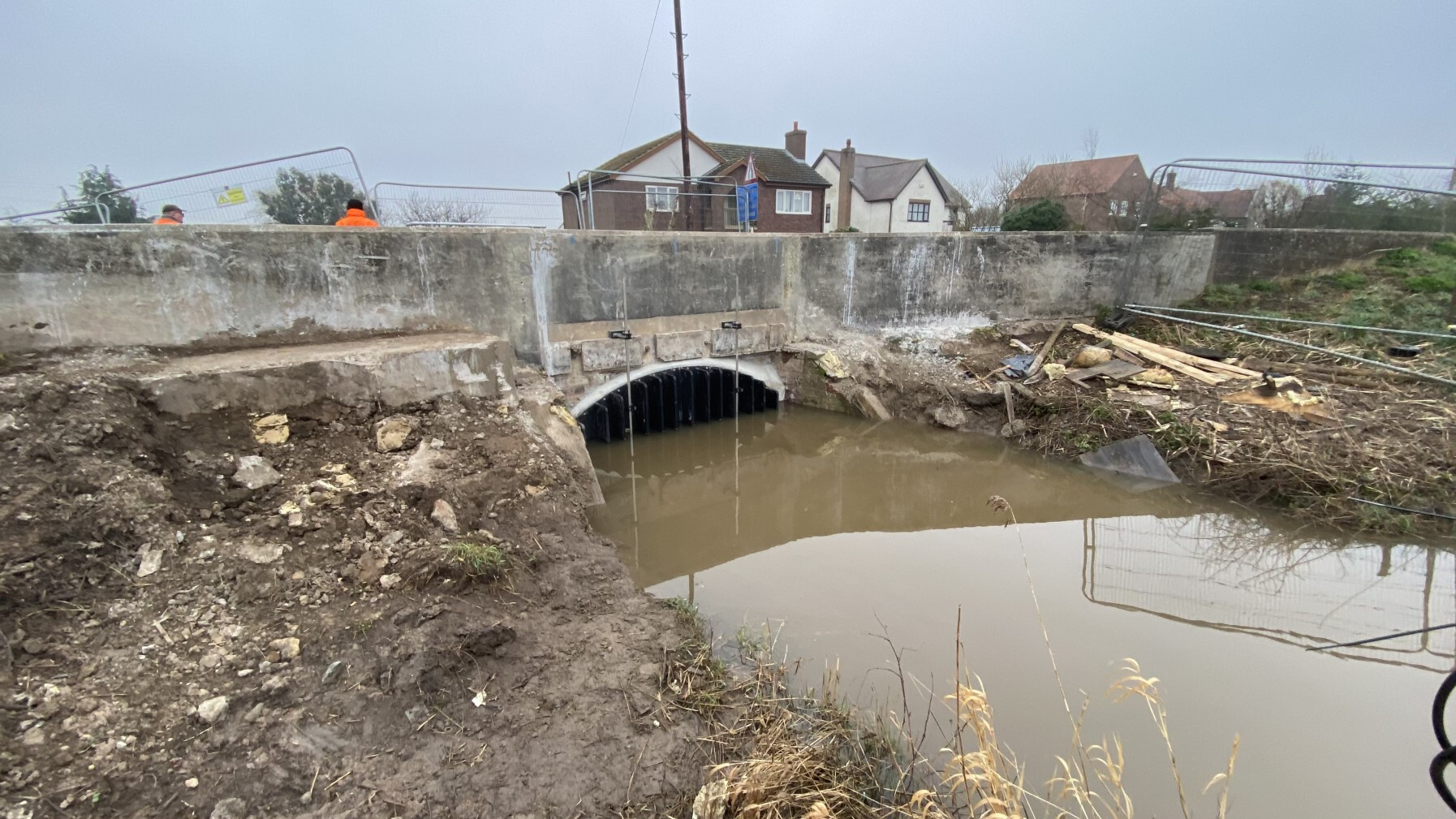
Phase 2 – to install new wooden penstock valves and install replacement new flood gates forming outlet to tidal River Ouse.
Flood gates prevent tidal and/or flood waters flowing back inland into low lying agricultural, residential and commercial areas with potential for significant flooding damage.
The river at this location is 268m wide with varying tidal depths from 0.0m up to 5.29m and frequent surges topping 7.4m. Obviously, any works involving tidal/flood gates generate considerable concerns for local residents and companies.
Key Aspects
Design
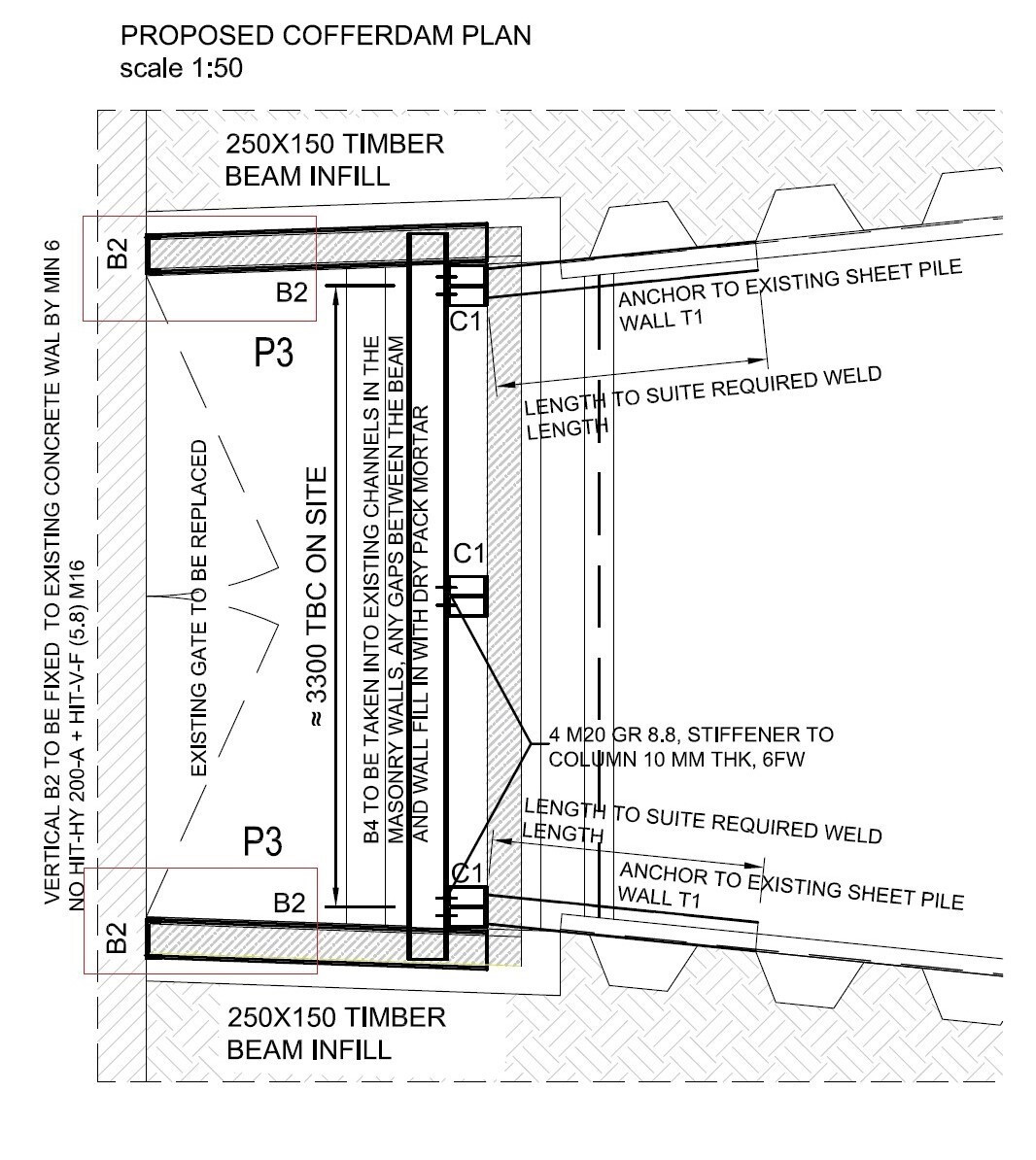
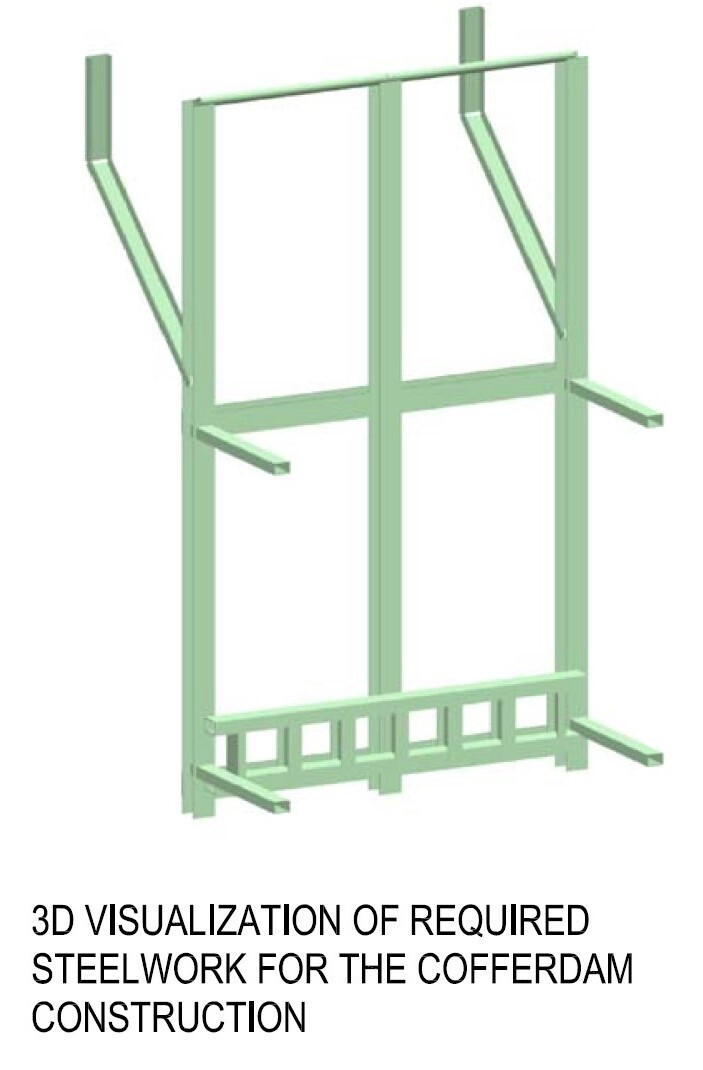
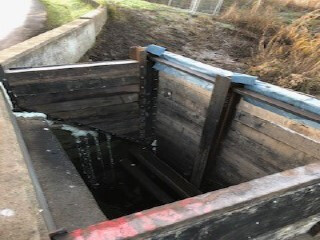
The state of the existing wooden door structure was surveyed and was deemed to be in a critical state. Urgently working with our designers, we developed a large scale cofferdam that could be used to mitigate all flood risk posed by the damaged doors for a long duration. With the time line of the project being across 12 months we had to ensure that the top of the cofferdam reached at least the height of the existing flood embankment making the cofferdam 6.18m tall. A lot of structural calculations had to be conducted to ensure the temporary cofferdam structure could withstand such a huge head of water pressure.
Speed
The urgency of the first phase meant that we had to respond exceptionally quickly, taking a lot of resources, materials and organisation. We successfully achieved our goal within 6 weeks working 2 shift patterns.
Road Closures
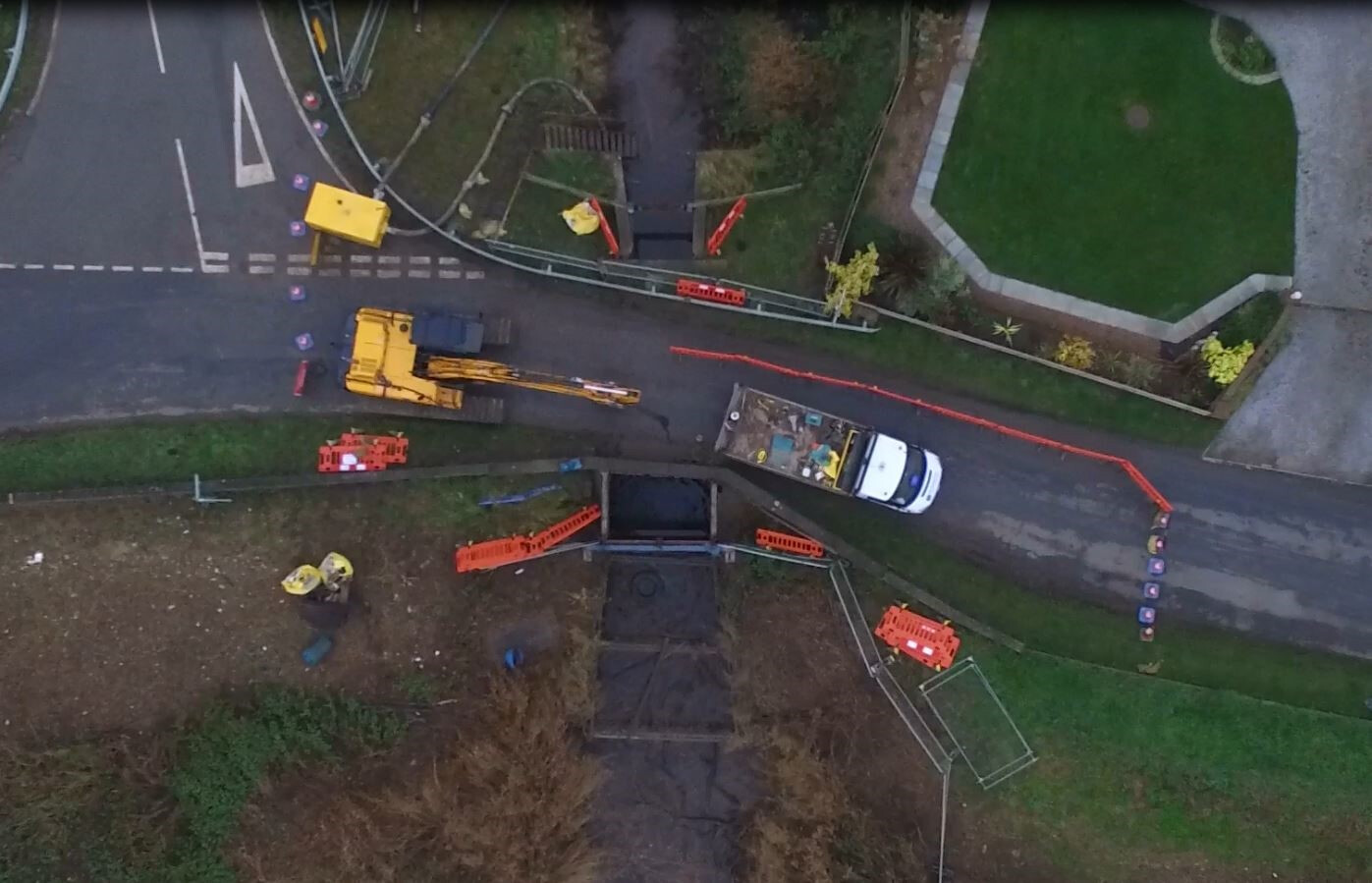
Urgency acknowledged - it was necessary to close the public highway for access as machinery was operated directly from the road under an emergency road closure. All necessary permits and statutory obligations were fulfilled and consultation with the local residents/business were carried out throughout the duration of the workings. Other obligations regarding utilities, access, diversions, school transport, council run services and full traffic management system to Chapter 8 regulations. Community liaison in post and person also formed part of our remit.
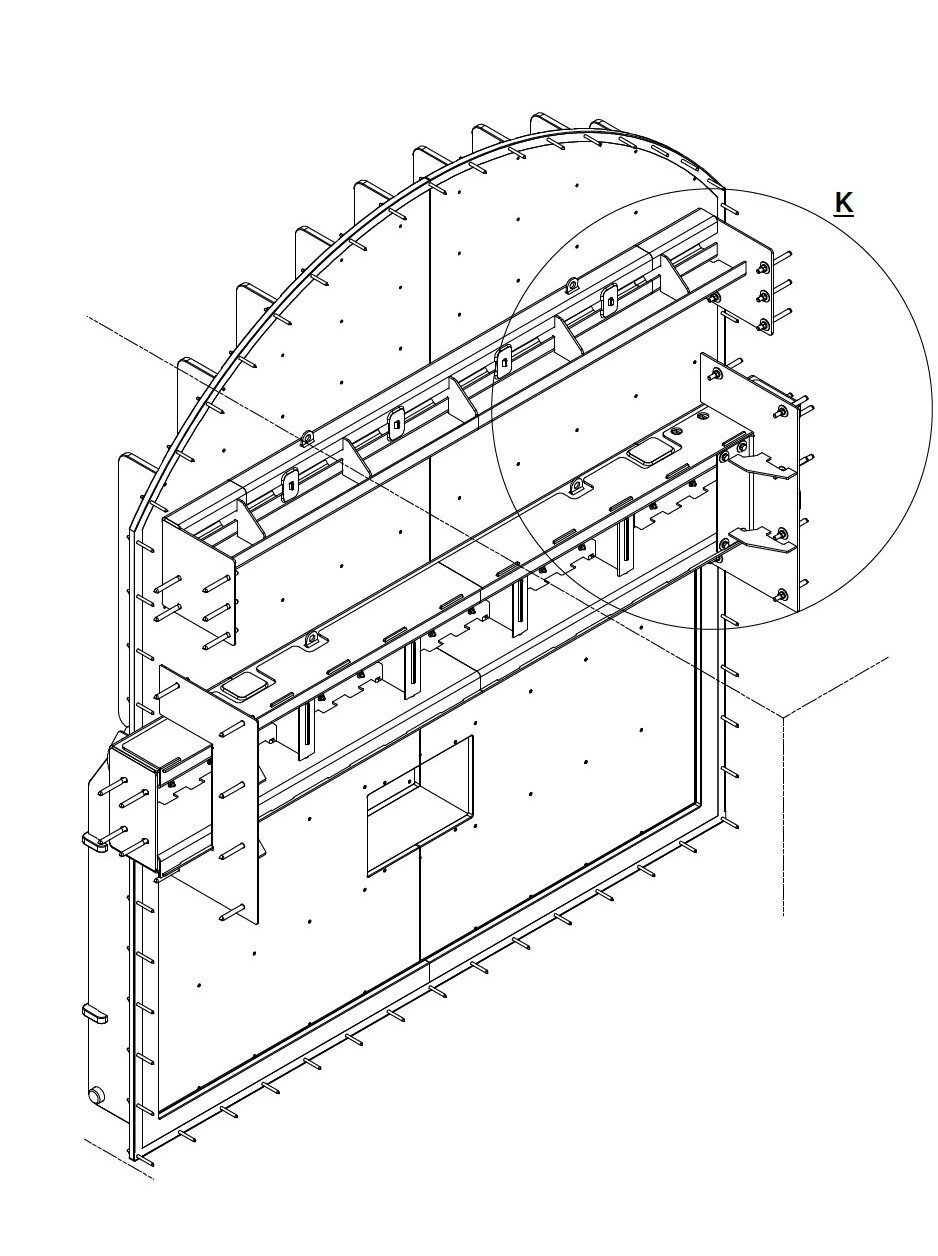
We also were challenged by the client to make an allowance for the cofferdam to allow some water to be able to run by gravity through the temporary cofferdam. We achieved this by using a steel frame in the base and fixing 6 x450mm diameter non-return flap valves. This element did add cost but allowed for greater capacity during wet times when the doors would normally be operating along side a pump station, This also had a cost saving to the client over the duration of the long project as it has had less electricity consumption to power the pump.
Challenges
Flood risk
By far the biggest issue and key at every stage; a lot of consideration and design work for temporary works had to be put in place before removing any existing infrastructure to ensure that did not cause any flooding. Large volumes of water coming through the drainage network had to be temporarily dammed off to make the workings dry. This was managed with 3 pumps one 8” and one 6” to cope with the volume of water that needed to be over pumped for the duration of the works 24/7.
Tides
The tidal nature of the River Ouse meant that works had to be planned and executed at key windows of opportunity around the best tide which meant some night working. We overcome this with portable site lighting but due to the proximity of residential properties, screening was necessary to deflect light away from the residential properties and only the quietest of tasks was undertaken during the night to minimise noise disturbance. A lot of consultation was carried out with 3 residential properties specifically.
Health & Safety
Working in the base of the existing culvert structure, the River Ouse bottom is a very difficult environment to keep clean and dry and posed significant risks to the health and safety of our workforce. In order to maintain safe working practices, it was necessary to excavate silt and debris and boulder rock to create a level platform to work from. A concrete foundation was cast in situ to build the new cofferdam on. To initially keep the workings dry had to over pumped with a 4” high pressure pump.
Cooperation
As with any large project where multiple stakeholders are involved, co-operation is key factor in success. Sweeting Bros Ltd are adept at managing multi-agency stakeholders.
A railway line was within 200m of the proposed works resulting in Network Rail participating in the planning/execution of the works.
Public Interest
Works of this nature typically engage both public interest and concern particularly from residents and businesses that are affected by flood gate removal works and possible flooding.
A great deal of time went into communicating with local residents, parish council and East Riding of Yorkshire Council throughout the duration of the works to alleviate concerns regarding the weather, anticipated flooding, lengths of work, progress and difficulties and inevitably frustration at road closures.
A fully Chapter 8 compliant traffic management programme was implemented and adapted to differing layouts throughout the project to accommodate weight and height restrictions on ancillary lanes and roads.
Planning a civil engineering project?
Speak to Sweeting Bros about flood protection, temporary works and watercourse engineering.