Environmental Remediation Works
Case study
Environmental Remediation Works
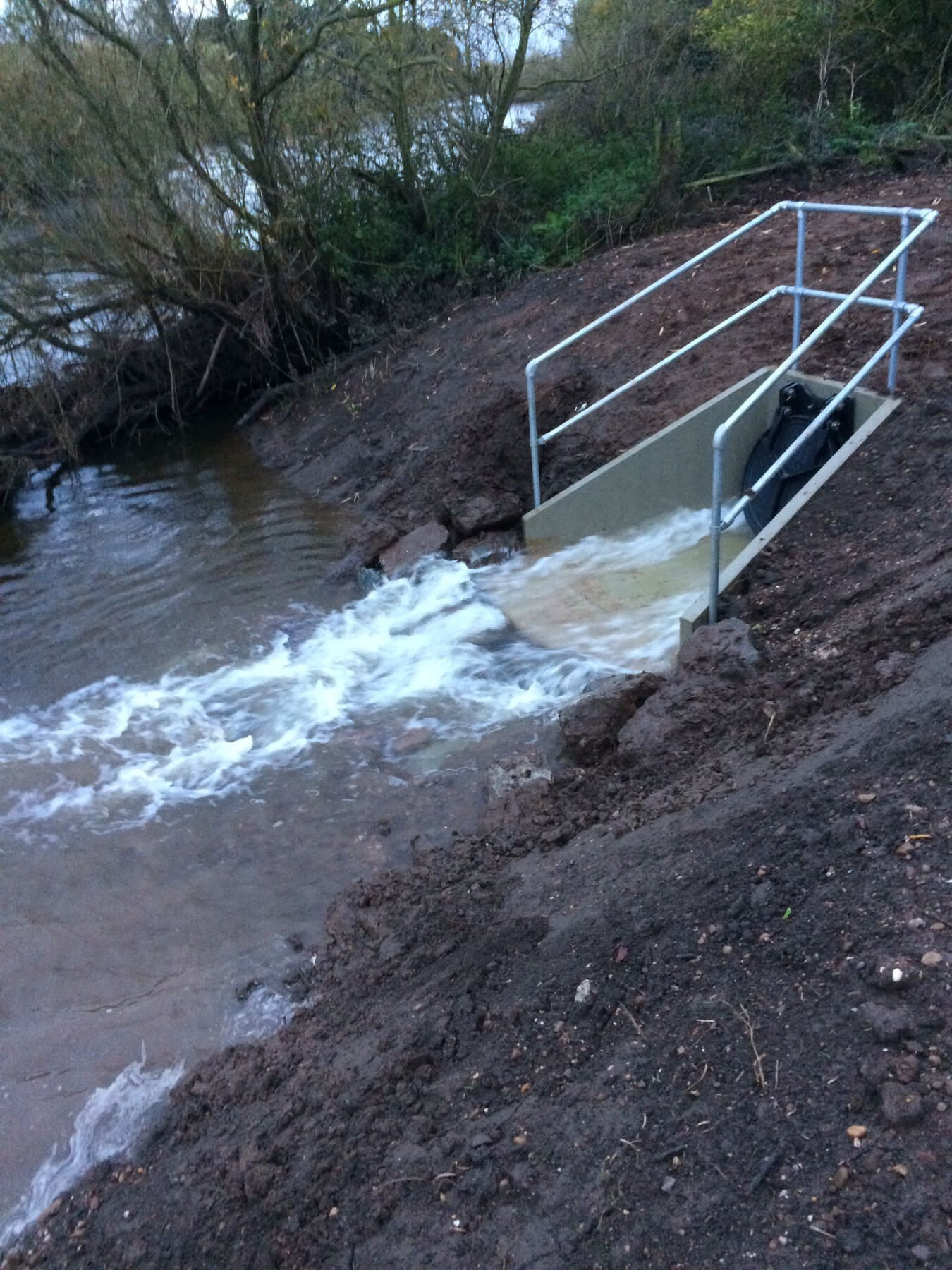
Culvert and outfall remediation works to the River Trent
Scope
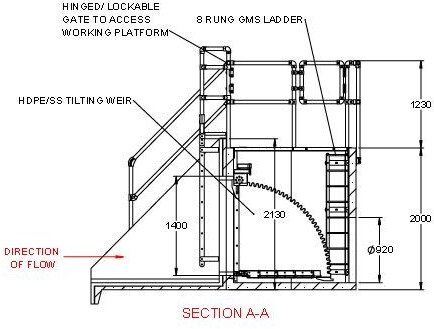
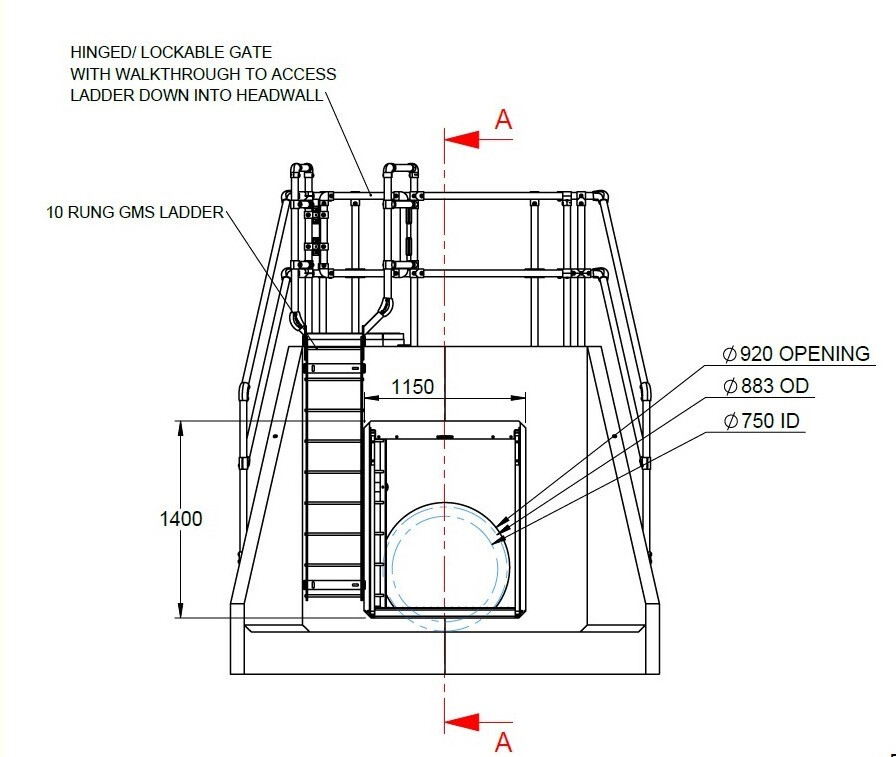
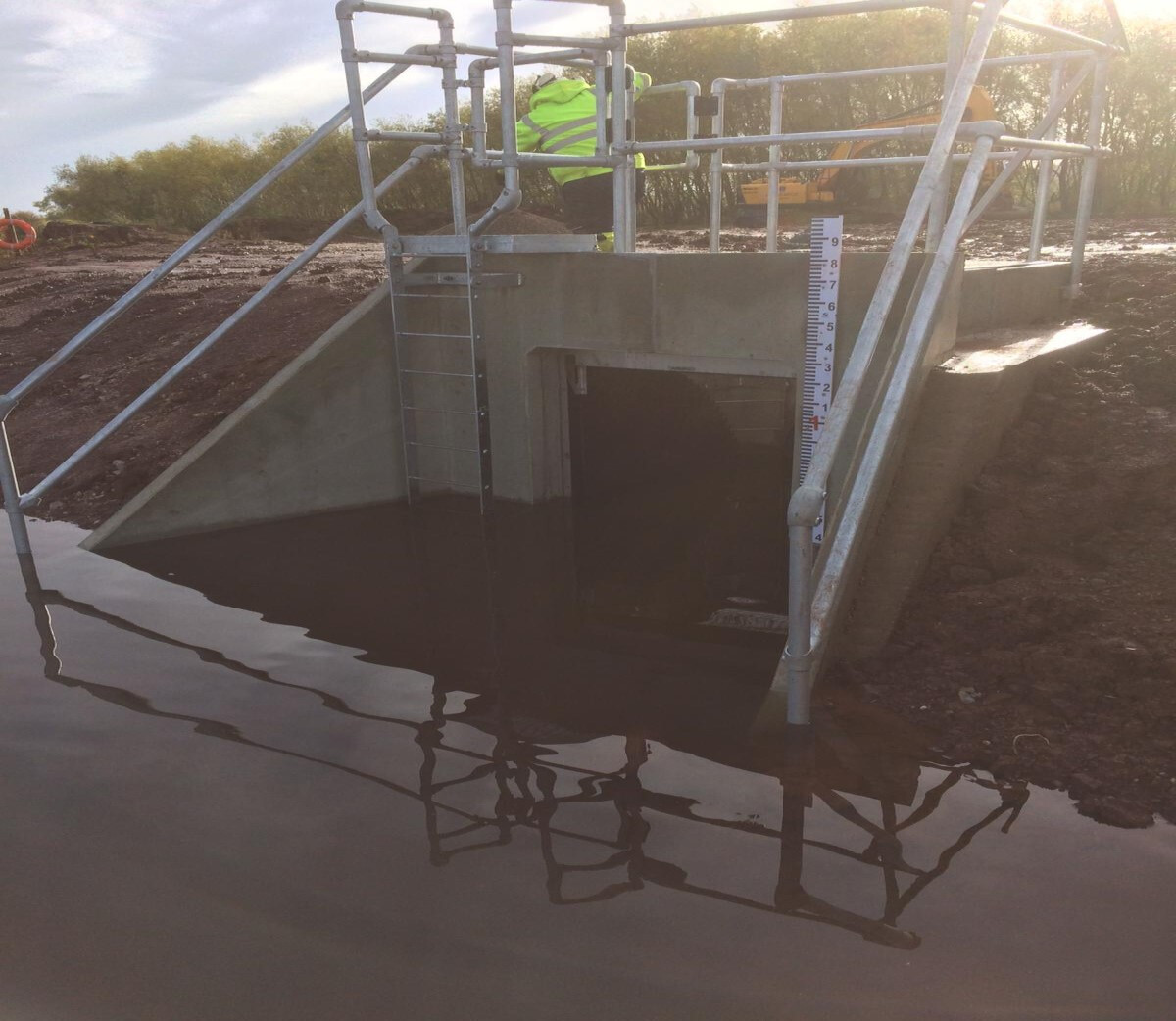
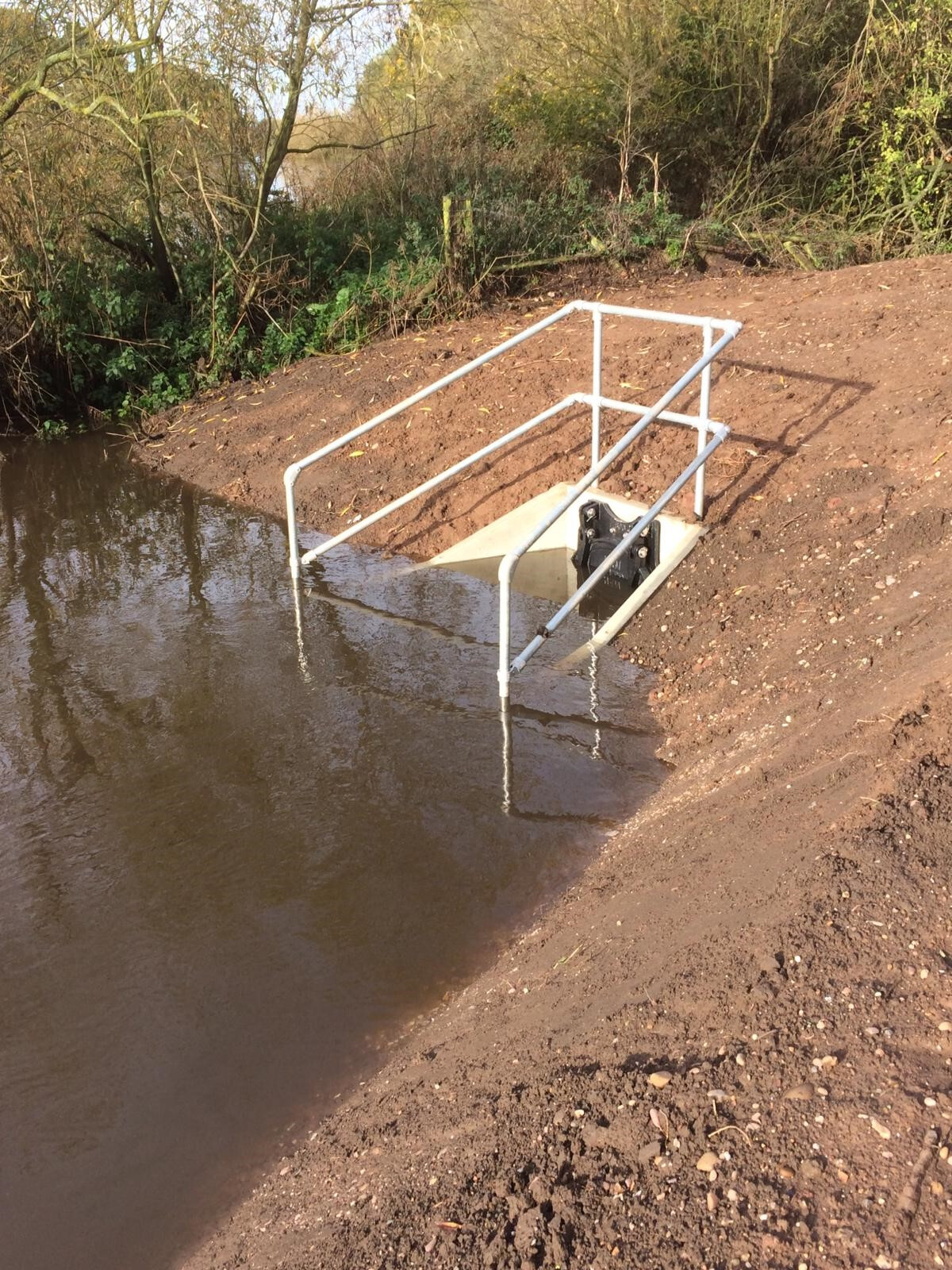
Following the ceasing of quarrying activities in the area, remediation works are being undertaken to restore the land. In preparation for a future nature reserve, a new 24m culvert pipe was to be laid connecting the new lake with a tilting weir in the nature reserve to an outfall to the River Trent. This was designed to help control the water levels in the reserve.
Tilting Weir Design Cross-Section
Tilting Weir Design Front Elevation
Key Aspects
- All necessary Environmental Permits including Environment Agency FR2 electro-fish rescue permit.
- Commission of Ecology Report.
- Riverside works supervised by Specialist Freshwater Ecologist.
- Bubble curtain silt-protection measures.
- Temporary works of steel sheet pile cofferdams to both lakeside and riverside locations to prevent flooding of the work areas and provide suitably dry conditions.
- Over-pumping discharge 20m away to facilitate ground percolation of silt-laden water being sieved prior to re-entering River Trent.
- Fish, eels and other aquatic-life rescue, segregation and stress-management measures.
- Biosecurity protocols including disinfection and pollution prevention.
- Working in and with water hazards.
Lake-side Tilting Weir Completed
Taking the role of Principal Contractor, Sweeting Bros Ltd have a long history of working in the quarrying community addressing specific issues during quarrying activities and in the post-working remediation necessary to return the land and environment to an equal or better standard than before.
Works were timed to reduce the risk of flooding and volumes of water from adverse weather conditions. Furthermore, in order to effect appropriate fish and aquatic-life protection measures, specialist services from a Freshwater Ecologist were needed.
All necessary permits from the Environment Agency were obtained in advance of works. In accordance with our Principal Contractor obligations under CDM 2015, co-ordination and co-operation methodologies were utilised to ensure appropriate supervision of sub-contract piling works together with our own directly undertaken activities by way of Risk Assessments and Method Statements.
Particular environmental concerns arise when working in the green environment, especially in or near bodies of water. Sweeting Bros Ltd have significant experience and have developed extensive biosecurity protocols together with habitat-protection measures.
River Trent Outfall with steel pile cofferdam in situ
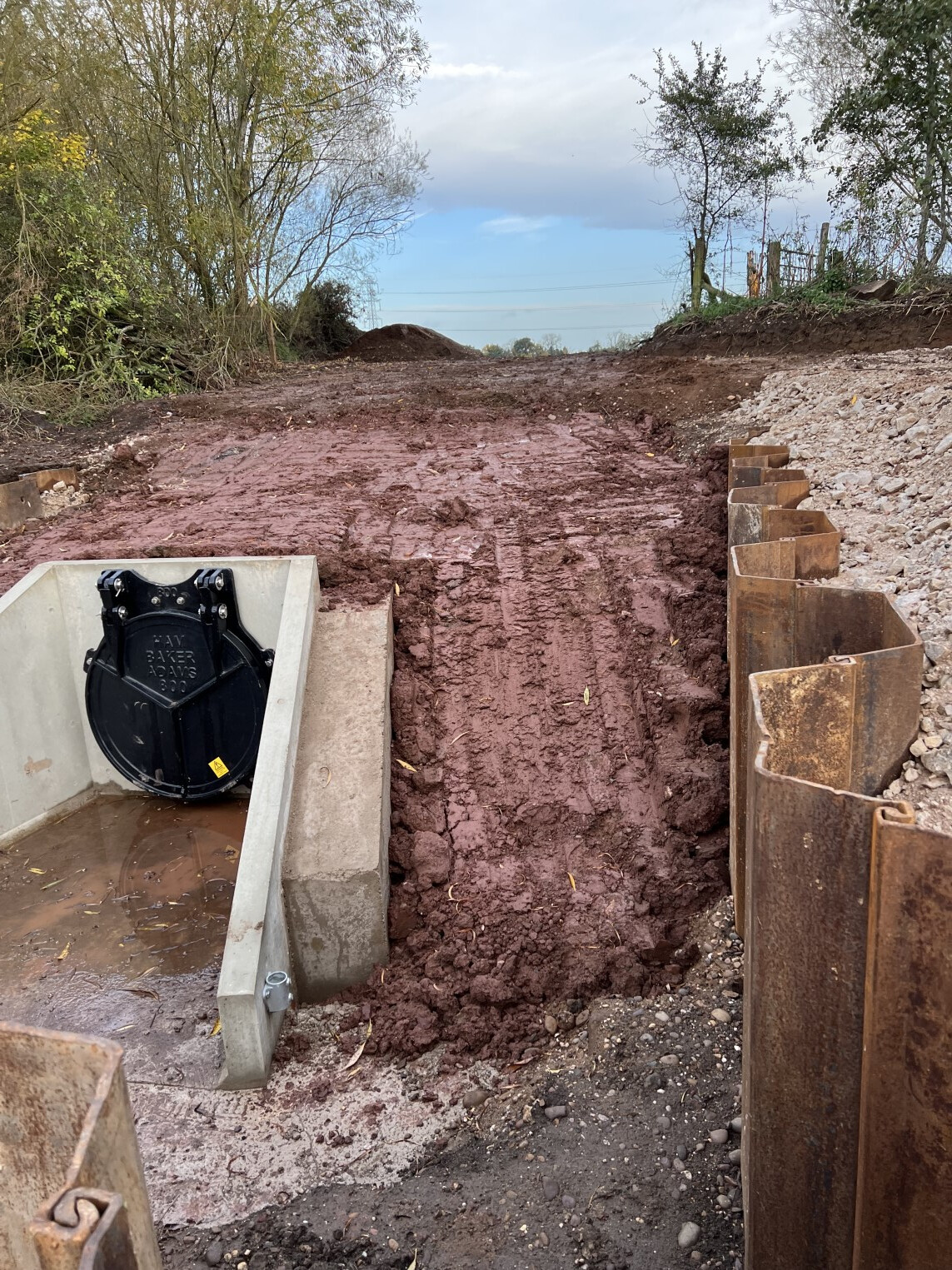
River Trent Outfall completed
Challenges
Flood Risk
A significant issue and key at every stage is the management of existing water bodies and forecasted weather conditions. Temporary works by way of steel piles had to be put in place before implementing any arrangements to cast new concrete infrastructure. Appropriate pumping out of water was required to ensure dry conditions were met.
Environmental Impact Minimisation
It was necessary to commission an Ecology Report to fully understand the nature of the habitats and wildlife in the area. Furthermore, to ensure that all protected species were known, together with all legislative and environmental considerations understood with regard to the potential impacts of the planned works.
Working in or near water in the green environment brings particular issues to overcome, such as access across long stretches of landowner fields together with the use of heavy plant using potential pollutants such as oils, grease and diesel fuels. This brings specific hazards. Pollution-prevention protocols were deployed such as daily checks, plant nappies and spill kits. Trackway protection and weight-dispersal measures together with tracked vehicles ensured substrate integrity remained intact.
Furthermore, wider protection measures were necessary, such as safe storage of potential pollutants, minimising human presence and activities including timings, durations and noise or air pollution from idling engines.
A bubble curtain was utilised specifically to manage the risk of silt being inadvertently discharged into the River Trent.
Biosecurity measures ensured no contaminants were either brought in or removed from the works area. All operatives and plant undertook disinfectant protocols.
Health & Safety
All workings were carried out compliantly under CDM 2015 protocols requiring Construction Phase Plans together with comprehensive assessment of all risks and method statements to minimise risks for all work elements.
Sweeting Bros Ltd have invested in mountain rescue sleds and equipment to facilitate patient evacuation in the event of an accident. Work is often in secluded, inaccessible areas with very poor ground conditions where ambulances or a helicopter may sink.
Planning a watercourse or environmental project?
Speak to Sweeting Bros about practical drainage, water-management, environmental and civil engineering works.